


Newsroom
-
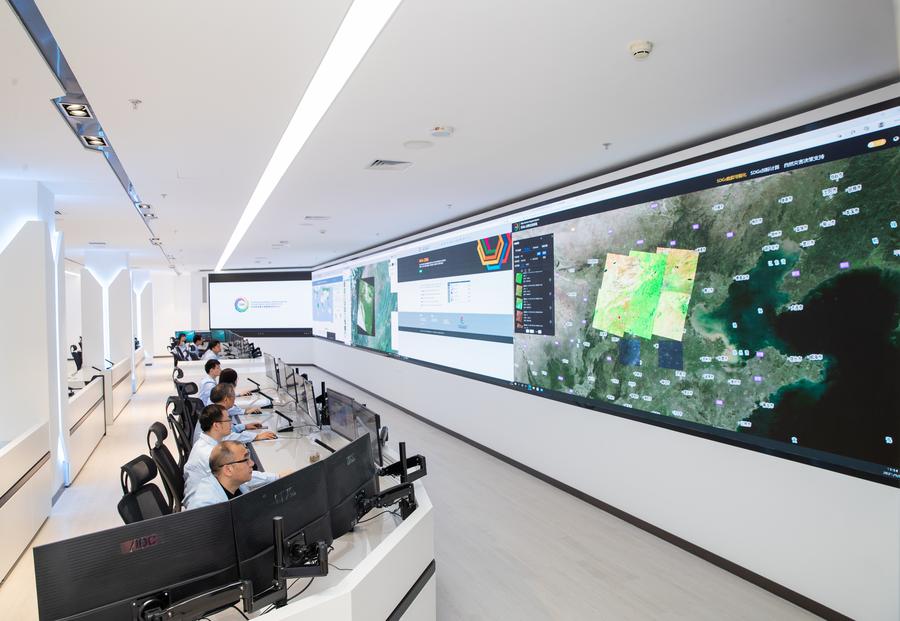 World's First Atlas of Remote-sensing Thermal Infrared Images Released in Beijing
Researchers work at the International Research Center of Big Data for Sustainable Development Goals (SDGs) in Beijing, capital of China, Sept. 8, 2021. (Xinhua/Jin Liwang) BEIJING, Sept. 7 (Xinhua) -- The International Research Center of Big Data for Sustainable Development Goals (CBAS), which is based in Beijing, on Friday released the world's first atlas of remote-sensing thermal infrared images, providing valuable data support for sustainable development research.
08 Sep 2024 -
 Burkina Faso's Prime Minister Visits Aerospace Information Research Institute
Burkina Faso's Prime Minister Apollinaire Joachimson Kyelem de Tambela visited the Aerospace Information Research Institute (AIR) under the Chinese Academy of Sciences (CAS) on the afternoon of September 4, during his trip to China for the 2024 Summit of the Forum on China-Africa
05 Sep 2024 -
-
Across China: China initiates microwave remote sensing experiments for vegetation, soil moisture
SHIJIAZHUANG, Aug. 7 (Xinhua) -- Chinese researchers have recently initiated remote sensing experiments for vegetation and soil moisture in north China's Hebei Province, according to the Aerospace Information Research Institute (AIR) under the Chinese Academy of Sciences.
08 Aug 2024 -
 CropWatch-ICP Regional Center Launched to Enhance Agricultural Resilience in West Africa
From July 2 to 5, the United Nations Commission on Science and Technology for Development (UNCSTD), the Aerospace Information Research Institute (AIR) of the Chinese Academy of Sciences (CAS), the Alliance of National and International Science Organizations for the Belt and Road Regions (ANSO), and the National Space Research and Development Agency of Nigeria (NASRDA) jointly hosted a landmark workshop on advanced crop condition remote sensing monitoring. The event, aimed to enhance agricultural resilience and food security in Nigeria and West Africa, witnessed the inauguration of the first overseas center under the CropWatch Innovation Cooperation Program (CropWatch-ICP) in the region.
19 Jul 2024 -
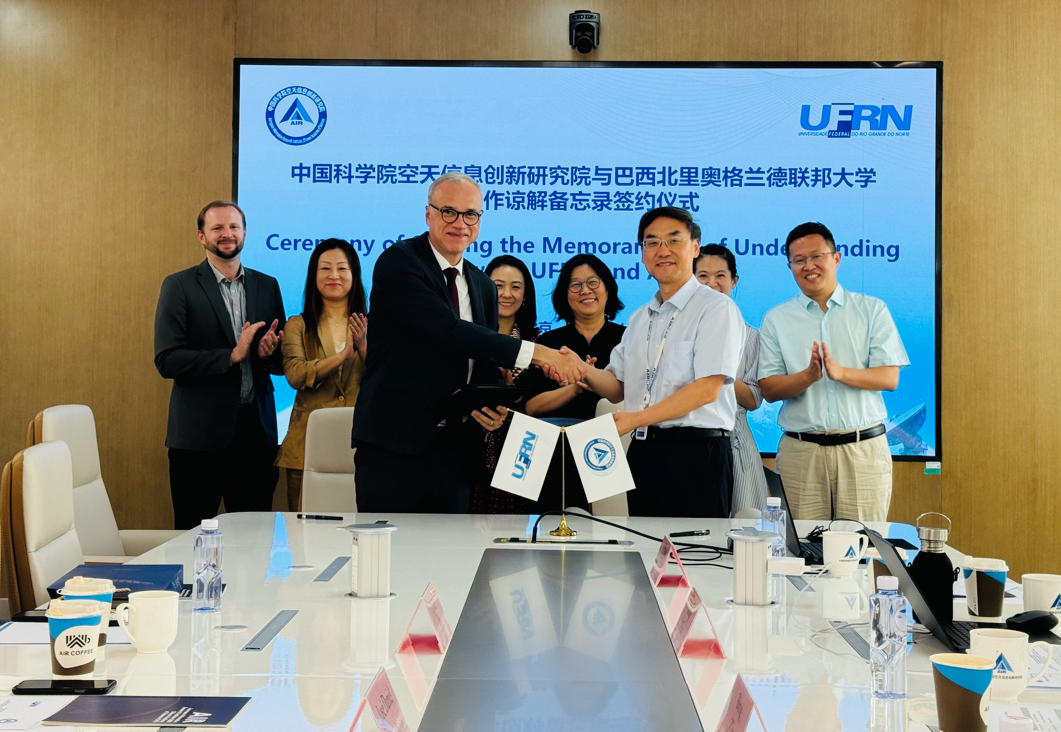 AIR, UFRN Sign MOU to Collaborate on Earth Observations
On July 8, 2024, the Aerospace Information Research Institute (AIR), Chinese Academy of Sciences (CAS) signed a memorandum of understanding (MOU) in Beijing with the Federal University of Rio Grande Do Norte (UFRN) of Brazil to boost further collaboration.
17 Jul 2024

